


In today’s highly competitive retail landscape, success depends on how effectively businesses can understand and act on their data. From tracking daily sales to analyzing customer behavior, retailers generate vast amounts of information every day. Without the right tools, this data can quickly become overwhelming and underutilized. This is where retail dashboards become essential.
Retail dashboards provide a centralized, real-time view of critical business metrics, enabling retailers to make faster and smarter decisions. By transforming raw data into actionable insights, these dashboards help businesses optimize operations, improve customer experiences, and increase profitability.
As consumer expectations continue to rise, adopting customized analytics dashboards is no longer optional—it is a strategic move toward sustainable retail growth.
The Importance of Data in Modern Retail
Retail has evolved significantly with the rise of digital platforms, eCommerce, and omnichannel strategies. Today’s retailers must manage multiple touchpoints, including physical stores, online platforms, and mobile apps.
Without proper data management, businesses often struggle with:
- Inaccurate inventory tracking
- Missed sales opportunities
- Poor understanding of customer preferences
- Inefficient marketing strategies
Retail dashboards address these challenges by consolidating data from various sources and presenting it in an easy-to-understand format. With access to real-time sales analytics and customer insights, retailers can respond quickly to changing market demands.
This data-driven approach allows businesses to stay competitive and deliver personalized experiences that customers expect.
What Are Retail Dashboards?
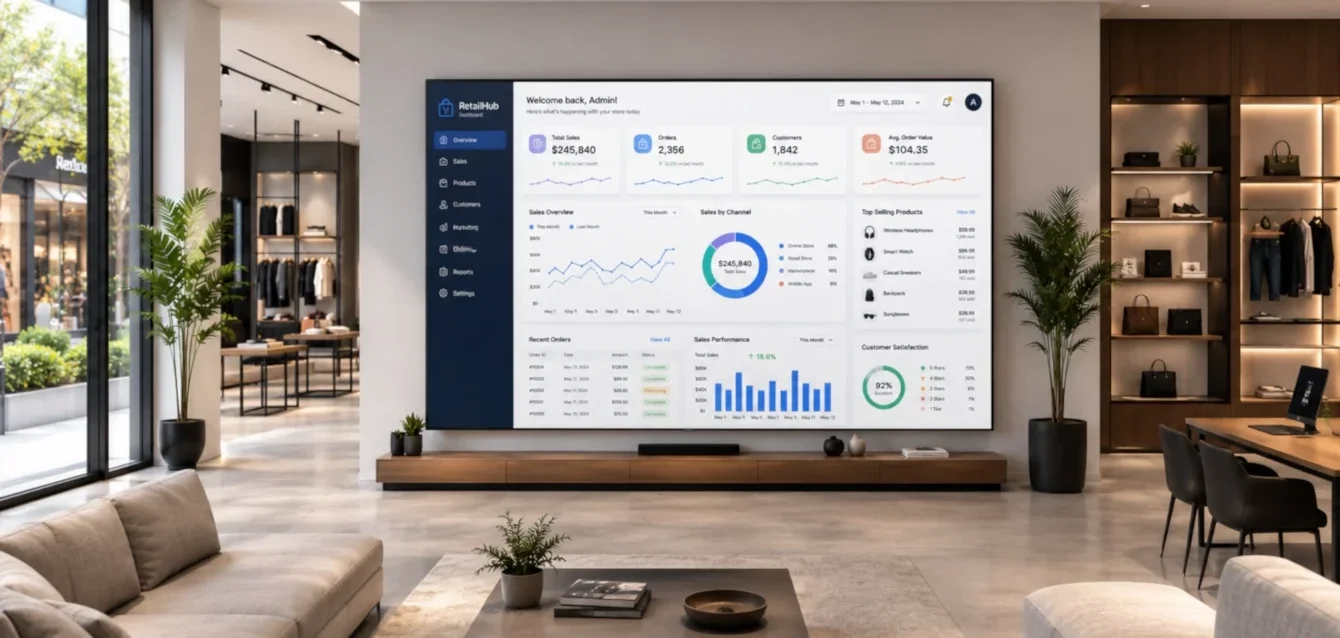
Retail dashboards are interactive data visualization tools designed to help retailers monitor and analyze key performance indicators (KPIs). They integrate data from multiple systems such as point-of-sale (POS) systems, inventory management tools, and customer relationship management (CRM) platforms.
These dashboards typically include:
- Sales performance metrics
- Inventory levels and turnover rates
- Customer behavior and purchase patterns
- Marketing campaign performance
- Revenue and profit analysis
Unlike traditional reporting methods, custom retail dashboards are tailored to the specific needs of a business, ensuring that decision-makers focus on the most relevant insights.
Key Benefits of Retail Dashboards
Real-Time Sales Insights
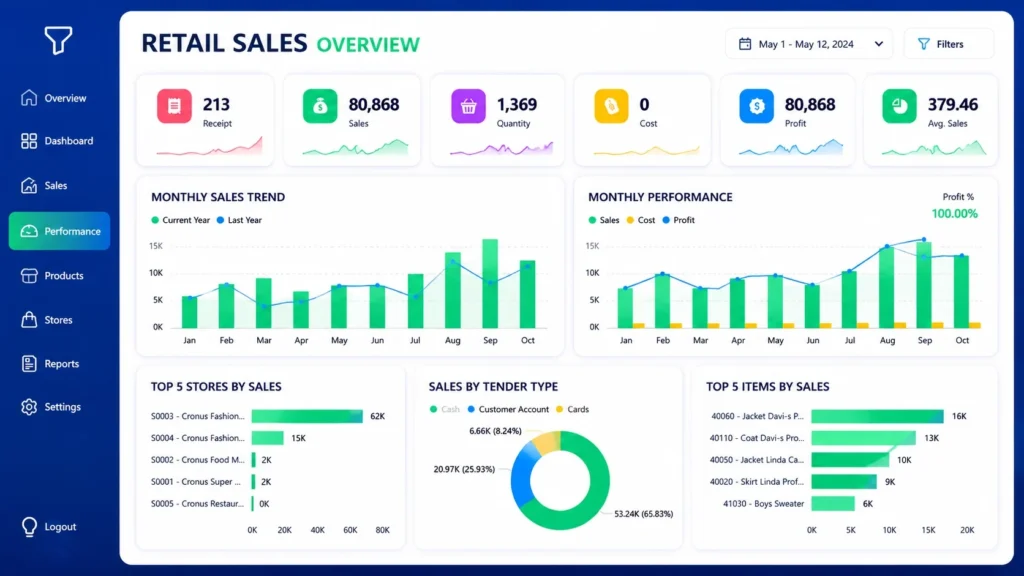
One of the most significant advantages of retail dashboards is the ability to monitor sales performance in real time. Retailers can track daily, weekly, or monthly sales trends and identify which products are performing well.
This enables businesses to:
- Adjust pricing strategies
- Promote high-performing products
- Address underperforming items
With real-time visibility, retailers can make quick decisions that directly impact revenue.
Improved Inventory Management
Inventory management is a critical aspect of retail operations. Overstocking or understocking can lead to financial losses and customer dissatisfaction.
Retail dashboards provide accurate, up-to-date information on inventory levels, helping businesses:
- Maintain optimal stock levels
- Reduce excess inventory
- Prevent stockouts
By aligning inventory with demand, retailers can improve efficiency and reduce operational costs.
Enhanced Customer Insights
Understanding customer behavior is key to driving sales. Retail dashboards analyze customer data to reveal patterns such as purchasing habits, preferences, and frequency of visits.
These insights allow businesses to:
- Personalize marketing campaigns
- Improve customer engagement
- Increase customer retention
By leveraging customer analytics, retailers can create more targeted and effective strategies.
Better Decision-Making
Retail dashboards simplify complex data, making it easier for decision-makers to interpret information and act quickly. Instead of relying on guesswork, businesses can base their strategies on accurate, real-time data.
This leads to more informed decisions and improved overall performance.
Custom Dashboards for Different Retail Needs
Dashboards for Store Managers
Store managers require detailed insights into daily operations. Custom dashboards for this role focus on:
- Daily sales performance
- Staff productivity
- Inventory levels
These insights help managers ensure smooth store operations and meet sales targets.
Dashboards for eCommerce Businesses
eCommerce retailers need dashboards that track online performance metrics such as:
- Website traffic
- Conversion rates
- Cart abandonment rates
These dashboards help businesses optimize their online presence and improve customer experience.
Dashboards for Retail Executives
Executives require a high-level overview of business performance. Their dashboards typically include:
- Revenue trends
- Profit margins
- Key performance indicators
This enables leadership teams to make strategic decisions that drive long-term growth.
Essential Features of Effective Retail Dashboards
Data Integration
A strong retail dashboard integrates data from multiple sources, providing a unified view of business performance. This ensures that all decisions are based on accurate and comprehensive data.
Customization
Every retail business has unique needs. Custom dashboards allow users to select the metrics and visualizations that align with their goals, making the tool more effective and relevant.
User-Friendly Interface
Retail dashboards should present complex data in a simple and intuitive format. Clear visuals such as charts and graphs make it easier for users to understand insights quickly.
Predictive Analytics
Advanced dashboards use predictive analytics to forecast trends and demand. This helps retailers plan inventory, optimize pricing, and anticipate customer needs.
How Retail Dashboards Drive Business Growth
Retail dashboards are powerful tools for driving growth and profitability. By providing actionable insights, they help businesses:
- Identify sales opportunities
- Optimize inventory management
- Improve customer experience
- Enhance marketing strategies
For example, analyzing sales trends can help retailers determine the best time to launch promotions. Similarly, understanding customer preferences allows businesses to offer personalized recommendations.
Over time, these improvements lead to increased revenue, stronger customer loyalty, and a competitive advantage in the market.
Implementing Custom Retail Dashboards
Implementing retail dashboards requires a strategic approach. Businesses should start by identifying key performance indicators (KPIs) that align with their objectives.
The next steps include:
- Integrating data from relevant systems
- Designing dashboards tailored to user roles
- Ensuring data accuracy and consistency
- Training teams to use the dashboards effectively
Partnering with experienced professionals can help ensure a smooth implementation process and maximize the value of the dashboard.
The Future of Retail Analytics
The retail industry is rapidly embracing digital transformation, and analytics dashboards are at the forefront of this change. Future trends in retail analytics include:
- AI-driven customer insights
- Automated reporting and alerts
- Integration with omnichannel platforms
- Advanced data visualization techniques
These innovations will further enhance the ability of retailers to make data-driven decisions and stay ahead of the competition.
Conclusion
In an increasingly data-driven world, retail dashboards have become essential tools for success. They provide real-time insights into sales, inventory, and customer behavior, enabling businesses to make smarter decisions and improve performance.
By adopting customized analytics dashboards, retailers can streamline operations, enhance customer experiences, and drive sustainable growth. As the retail landscape continues to evolve, leveraging data effectively will be the key to staying competitive and achieving long-term success.
FAQ Section
What are retail dashboards used for?
Retail dashboards are used to track sales performance, monitor inventory levels, analyze customer behavior, and measure overall business performance in real time.
How do retail dashboards improve sales?
They provide real-time insights into sales trends and customer preferences, allowing businesses to adjust strategies and maximize revenue.
Can retail dashboards be customized?
Yes, retail dashboards can be tailored to meet the specific needs of a business, focusing on relevant metrics and KPIs.
Are retail dashboards useful for small businesses?
Absolutely. Small businesses can benefit from improved efficiency, better decision-making, and enhanced customer insights.
What features should a good retail dashboard include?
A good retail dashboard should include real-time data updates, inventory tracking, customer analytics, data integration, and a user-friendly interface.