


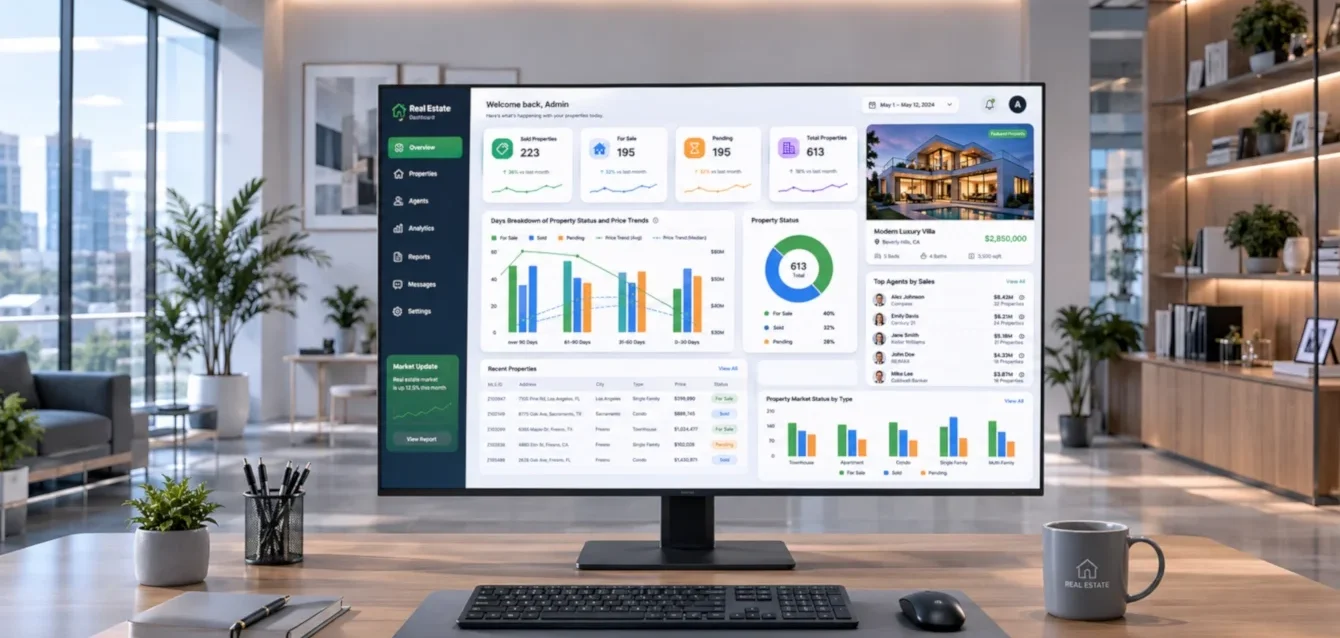
In today’s fast-paced property market, success depends on how quickly and accurately you can interpret data. From tracking property listings to understanding buyer behavior, real estate professionals are constantly dealing with large volumes of information. This is where real estate dashboards come into play.
Modern real estate dashboards transform scattered data into clear, actionable insights. Instead of relying on spreadsheets or disconnected tools, agencies and investors can access real-time data in one centralized interface. This not only improves operational efficiency but also enables smarter, faster decision-making.
As the industry becomes more competitive, adopting custom dashboards is no longer optional—it’s a strategic necessity for growth, scalability, and long-term success.
Why Data Matters in Modern Real Estate
The real estate industry has evolved beyond traditional methods. Today, decisions are driven by property analytics, market trends, and customer insights.
Without proper data visualization, businesses often face:
- Delayed decision-making
- Inaccurate property valuations
- Poor lead conversion rates
- Inefficient portfolio management
Real estate dashboards solve these challenges by converting raw data into meaningful visuals. Whether it’s tracking sales performance or analyzing regional demand, dashboards provide a comprehensive view of business operations.
This shift toward data-driven decision-making allows real estate professionals to stay ahead of market trends and make proactive, rather than reactive, choices.
What Are Real Estate Dashboards?
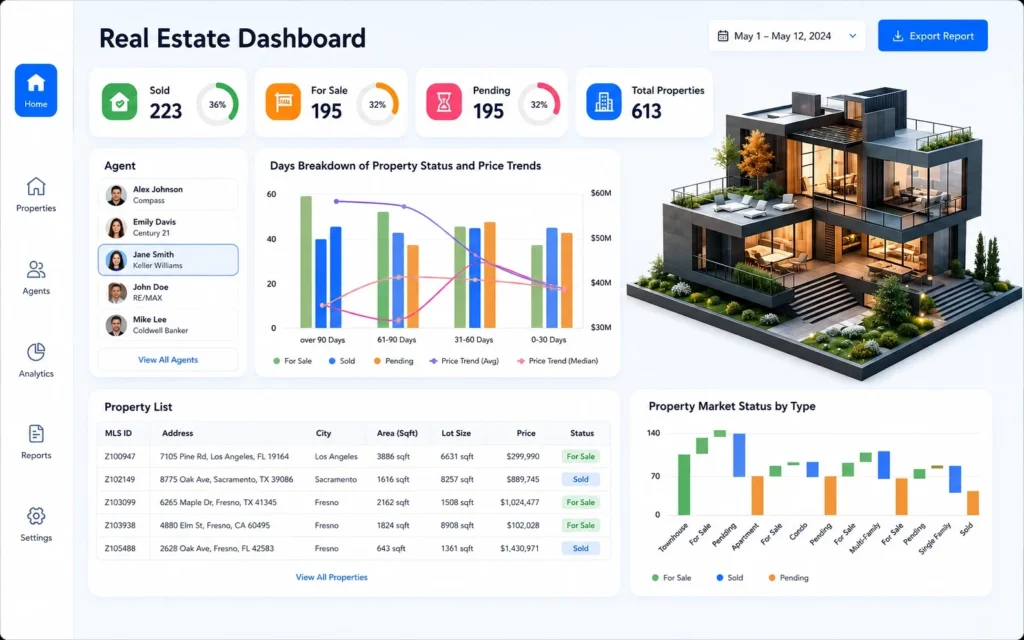
Real estate dashboards are interactive data visualization tools designed specifically for property professionals. They collect, process, and display data from multiple sources in a unified interface.
These dashboards typically include:
- Property performance metrics
- Sales and revenue tracking
- Lead generation and conversion data
- Market trend analysis
- Customer behavior insights
Unlike generic reporting tools, custom real estate dashboards are tailored to specific business needs. This means agencies, brokers, and investors can focus only on the data that truly matters to them.
Key Benefits of Real Estate Dashboards
Improved Decision-Making
One of the biggest advantages of real estate dashboards is the ability to make informed decisions quickly. With real-time access to property data and analytics, professionals can evaluate opportunities and risks with confidence.
Instead of guessing market trends, dashboards provide evidence-based insights that support strategic planning.
Real-Time Property Insights
Timing is critical in real estate. A delay in responding to market changes can result in lost opportunities.
Real estate dashboards provide:
- Live updates on property listings
- Real-time sales performance
- Instant alerts on market shifts
This ensures that businesses can act immediately when opportunities arise.
Enhanced Sales and Lead Management
Managing leads effectively is essential for closing deals. Custom dashboards allow teams to track:
- Lead sources
- Conversion rates
- Sales pipeline performance
With this level of visibility, agencies can optimize their sales strategies and improve overall conversion rates.
Better Portfolio Management
For investors and property managers, dashboards provide a clear overview of portfolio performance. This includes:
- Rental income tracking
- Occupancy rates
- ROI analysis
By consolidating this information, dashboards help identify high-performing assets and areas that need improvement.
Custom Dashboards for Different Real Estate Needs
Dashboards for Real Estate Agencies
Agencies benefit from dashboards that focus on sales performance, agent productivity, and client interactions. These dashboards help managers monitor team performance and identify top-performing agents.
They also provide insights into customer preferences, enabling more targeted marketing campaigns.
Dashboards for Property Investors
Investors require dashboards that highlight budgetary performance and risk analysis. Custom dashboards can track:
- Return on investment (ROI)
- Property appreciation trends
- Rental yield performance
This allows investors to make data-driven decisions when buying, selling, or holding properties.
Dashboards for Property Managers
Property managers need tools that streamline operations. Dashboards designed for this purpose include:
- Maintenance tracking
- Tenant management
- Payment monitoring
These insights help improve tenant satisfaction while reducing operational inefficiencies.
Key Features of Effective Real Estate Dashboards
Data Integration
A powerful dashboard integrates data from multiple sources such as CRM systems, property listing platforms, and financial tools. This ensures a complete and accurate view of business performance.
Customization and Flexibility
Every real estate business is unique. Custom dashboards allow users to choose the metrics and visualizations that align with their goals.
This flexibility ensures that the dashboard remains relevant as the business grows.
User-Friendly Interface
Complex data should be easy to understand. Effective dashboards use intuitive designs, charts, and graphs to present information clearly.
This makes it easier for teams to interpret data and take action without technical expertise.
Predictive Analytics
Advanced dashboards incorporate predictive analytics to forecast market trends. This helps businesses anticipate changes and stay ahead of competitors.
How Real Estate Dashboards Improve Business Growth
Real estate dashboards are not just tools—they are growth enablers. By providing actionable insights, they help businesses:
- Identify profitable opportunities
- Optimize marketing strategies
- Improve operational efficiency
- Enhance customer experience
For example, understanding buyer behavior allows agencies to tailor their offerings, increasing the chances of closing deals. Similarly, tracking market trends helps investors make smarter investment decisions.
Over time, these improvements lead to higher revenue, better client relationships, and stronger market positioning.
Implementing Custom Real Estate Dashboards
Adopting real estate dashboards requires a strategic approach. Businesses should start by identifying their key performance indicators (KPIs).
Once KPIs are defined, the next steps include:
- Selecting the right data sources
- Designing a customized dashboard layout
- Ensuring data accuracy and consistency
- Teams to use the dashboard effectively
Working with experienced professionals can simplify this process and ensure that the dashboard aligns with business objectives.
The Future of Real Estate Analytics
The future of real estate lies in advanced analytics and automation. As technology continues to evolve, dashboards will become even more powerful.
Emerging trends include:
- AI-driven insights
- Automated reporting
- Integration with smart property technologies
- Enhanced data visualization techniques
These innovations will further enhance the ability of real estate professionals to make data-driven decisions.
Conclusion
In an industry where timing, accuracy, and insight are critical, real estate dashboards have become essential tools for success. They transform complex data into clear, actionable insights that empower agencies, investors, and property managers.
By adopting custom dashboards, businesses can improve decision-making, streamline operations, and gain a competitive edge. As the real estate landscape continues to evolve, those who leverage data effectively will lead the market.
Investing in data-driven solutions today is not just about efficiency—it’s about building a smarter, more resilient real estate business for the future.
FAQ Section
What are real estate dashboards used for?
Real estate dashboards are used to track property performance, analyze market trends, manage leads, and monitor financial metrics in a centralized platform.
How do real estate dashboards improve decision-making?
They provide real-time data and visual insights, allowing professionals to make informed decisions quickly and accurately.
Can real estate dashboards be customized?
Yes, custom dashboards can be tailored to specific business needs, focusing on relevant metrics such as sales, ROI, or tenant management.
Are real estate dashboards suitable for small agencies?
Absolutely. Even small agencies can benefit from dashboards by improving efficiency, tracking performance, and making better data-driven decisions.
What features should a good real estate dashboard include?
A good dashboard should include data integration, real-time updates, user-friendly design, customization options, and predictive analytics.